
Molson Coors CMO Sofia Colucci on Shifting Consumer Habits and Meeting People at all Drinking Occasions (Dry or Not)
+ 5 things marketers need to know about the TikTok deal + eos’ tasty-big Super Bowl play + JCPenney will swap your ex’s jewelry for a new diamond this Valentine’s Day

Hi there. January done, in the locker. Bosh. Who went dry? Or moist? (Actually, damp—let's use damp.) Good for you. Good for you.
The choices have never felt more plentiful. And, to be honest, the pressure to pick a lane never so low. It probably has something to do with Molson Coors Beverage Company CMO Sofia Colucci.
We sat down with the head honcho of bevies to chat about, well, everything. Note to send follow-up question for name of that steak restaurant in Uruguay.
📢 The CMO MO: Sofia Colucci of Molson Coors
📱 5 things marketers need to know about the TikTok deal
🎂 eos’ tasty-big Super Bowl play
💎 JCPenney will swap your ex’s jewelry for a new diamond this Valentine’s Day
📢 The CMO MO: Sofia Colucci of Molson Coors
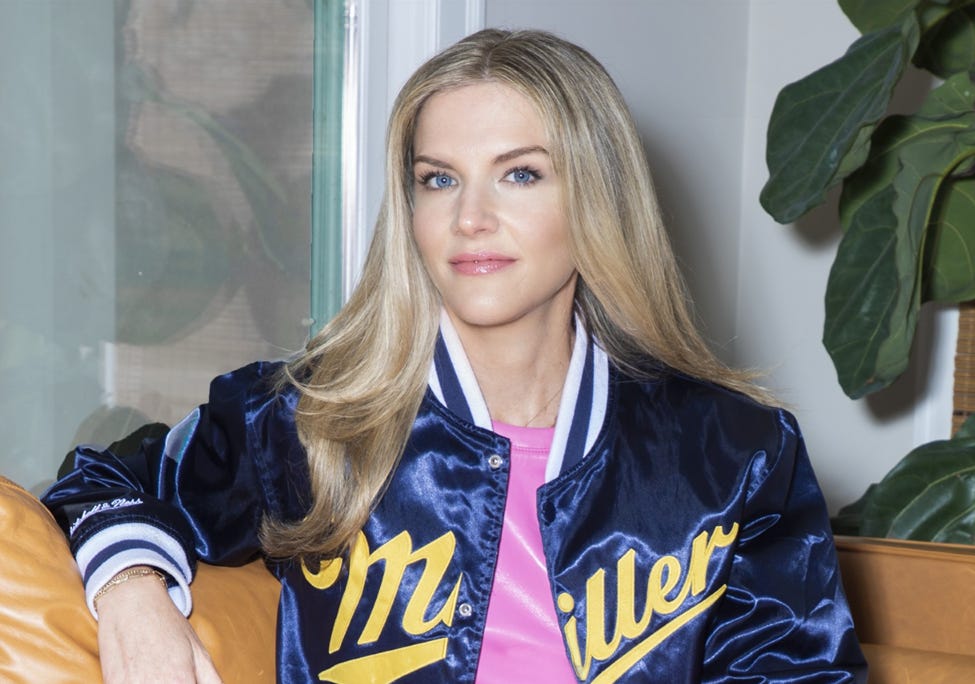
Hey. What kind of January are you having? Dry? Dry-ish? Very-much-not-dry?
Definitely a damp one. In our world, beer is always core to what we do so, I’m taking some inspiration from our new Miller Lite campaign and the Damp January Club.
Let’s get right into consumer sentiment around alcohol. Where are we at today? It feels like, while we’ve experienced a surge in low/no-alcohol alternatives and an “all or nothing” culture, perhaps the pendulum is swinging more towards moderation? What’s your take?
There’s no question, people are still drinking alcohol. That includes beer but also a wide range of beverages. What we’re seeing though is people are flexing what products they reach for across all drinking occasions.
We support all of this, which is why we have a wide range of options to meet consumers where they are. This includes both traditional beer and non-alc beer, like Peroni 0.0., options in flavored alcohol like Topo Chico Hard and Simply Spiked. But it also means non-alc options like Naked Life spirit-free cocktails, Fever Tree mixers and ZOA energy.
You’ll also see this mindset reflected in our marketing. Last fall for Blue Moon Non-Alc, we worked with Mischief to use “Answers on Cans” to take the pressure out of explaining why you’re not drinking. It’s not that serious, just enjoy what’s in your hand!
Dry or not—how is Molson driving occasions for beer across the portfolio?
Championing beer and getting people to choose beer in key drinking occasions is a top priority for Molson Coors. For centuries, people have connected over a beer. But nowadays, people do that less and less. So it’s a major focus in our campaigns to articulate that idea.
For Thanksgiving, we did our first portfolio campaign that encouraged people not to overthink holiday hosting and “Just Bring the Beer.” Earlier this month, we debuted our new “Legendary Moments Start with a Lite” campaign for Miller Lite with Christopher Walken, that encouraged drinkers to connect in person. It also means that we show up in natural beer moments, like sports, which you can see in our recent “Performance Enhancing Canadians” work with Molson and Peroni “Here for the Nastro Azzurro” campaign.
How has the role of the modern-day marketer changed?
Ultimately, what we need to do as marketers hasn’t changed—we need to understand our consumers, develop strategies to best connect with them and build love for our brands. Easy right? The fundamentals haven’t changed—it’s the way we do it that has become much more complex.
So, as a modern marketer it’s just not sustainable to rely on trusted playbooks. We need to be constant students, be vulnerable and admit we need to learn new spaces. Whether that’s embracing new ways of working or setting up learning opportunities for our teams and ourselves, it’s imperative.
A few weeks ago, we had a marketing offsite where we dove deep into social media to understand what great looks like and where we can get stronger. If we don’t push ourselves to learn and grow, we’ll be left behind.
What does it take for marketers and their teams to be creatively fearless AND effective? Know you’ve done a lot of work behind the scenes to put tangible framework around this.
You need to properly leverage art and science. Our teams have access to so much great data and tools—but we were overly reliant on them. So, we got our agencies together and realized we needed to codify how we think about creative effectiveness. What we ended up with is MUSCLE—an acronym where each letter stands for something we’re looking for in our work and campaigns (magnetic, unexpected, simple, crafted brilliantly, tied to a long-term platform and the essence of the brand). Since then, we’ve been relentless to use it for briefing, evaluating work and more. We still love and use science (neuroscience to test our ads, bottoms up, MTA)—we are just using MUSCLE now as well. The result? Our testing and creative are both stronger.
The biggest challenge you’ve faced in your tenure as CMO.
This is nothing new, but consumer behavior and consumption habits continue to shift. We want to be closer to our drinkers than ever before, so we are in the midst of critically evaluating all the places we interact with them. From the research we do about them to how they interact with us on social, we’re really intent on discovering how our brands play in our audience’s lives and how we can learn from that.
What’s keeping you up at night? Or do you sleep like a baby.
Obviously I sleep like a baby. I wish! The reality is that it’s not just one thing that will wake me up in the middle of the night. Like all of us, I have work, family and friends. And yes, I wake up stressing about major job challenges. But just as often (if not more) I’ll wake up worrying about one of my sons and a play date they might have had. Or I’ll think about a conversation I wish could have gone better with a colleague. So it’s a good reminder that yes—we all have big work stresses—but relationships are key.
What do you think marketers need from their agencies now more than ever?
Truly understand the challenges of our business and help us with creative ideas that will get consumers reaching for our products. This also means being crystal clear on who we are going after and how to best reach them. We love culturally relevant ideas that go beyond traditional media channels. We aren’t going to stop doing those things. Ever. But we also can’t ignore our always-on brand-building work. For instance, a lot of our consumers are watching football, so our ads also need to work really hard there. We need creative effectiveness at every consumer touch point.
So much of your portfolio is just as much about the experience your brands give, as it is about the taste/quality. How do you find new and unique ways to promote the former?
Today, the definition of a “great experience” can be a little unclear. Does it mean engaging with something in person? Following your favorite celeb or TV show? It’s all a little gray. Regardless of channel, we want to find smart ways for our brands show up where our drinkers are. That can be with traditional campaigns, like we’re doing with Miller Lite, or through festivals, events, and our many alliance partners across the world of sports.
It can also be through the right partners. To many, fandom is an experience. So, it’s all about finding the right fit to bring that to life and translate it into an experience for our followers. Great examples of this are the work we’ve done with Coors Light and Coors Banquet.
Patrick Mahomes is a loyal Coors Light fan, and we’ve turned that organic love into new ways to engage with Coors Light, whether it’s plunge pools or dad bod t-shirts.
Yellowstone organically featured Coors Banquet as the go-to beer of real cowboys. So, we turned that into an official partnership, where we could use our beer, bottle caps and merch, to get fans excited for the show’s return.
Sorry. Of course there’s an AI question: How are you thinking about the role AI plays in your marketing mix?
We are starting to explore our approach to generative AI and have been developing protocols and standards. We have a few strong use cases across our marketing team. We have also been championing the use of AI in our teams’ everyday work. Ultimately, we are looking at AI as a powerful tool to help each of us get stronger in the day-to-day and over time simplify and streamline more lower-funnel initiatives.
What metrics do you now consider the true north star for success?
As part of our creative effective framework, we developed KPIs. Ultimately, we need to drive the business—so revenue and share are the goals. To get there, we need to drive the health of our brands. We are constantly looking at brand equity measures to see if we are building brand love.
What’s the best career advice you’ve ever received?
This might be controversial, but as a daughter of immigrants I learned early on that it’s not about ‘finding your passion.’ I think sometimes (not always) that can give people the wrong expectations. Now I’m not saying do work just for the money. Not at all. My philosophy (and I have heard Scott Galloway talk about this too): 1) Find something you like—yes you need to like it and find it interesting (but don’t feel you need to be passionate about it😉). 2) Make sure you are good at it (this helps with your success). And 3) Make sure you can make a career out of it. Then once you have these three—work your butt off. The idea here is that since you are working hard, you are good at it and you like it, more and more interesting things will come. And hey, over time you might find your passion. Because you get passion from mastering something over time.
How do you see the CMO role evolving over the next few years?
No surprise here, but given the digital transformation and changing marketplace, CMOs are going to need to wear many hats. They will need strategic leadership to operate as growth executives, have data-driven decision making and be relentlessly focused on the consumer experience. And now more than ever, cross-functional collaboration and the ability to partner and influence is critical.
The one question you wish we asked (and the answer).
Yes, I do happen to love food and the best steak in the world can be found in Uruguay.
📱 5 things marketers need to know about the TikTok deal
If you’re a chronic TikTok user or creator, you’re not crazy—everyone’s app was messed up this week as the platform moved its data from China to the US. Here’s what marketers need to know about the deal.
Ownership has changed: After more than five years of political war, TikTok is saved. It is here to say. There is no longer an imminent threat of the app vanishing. But its structure has completely changed: ByteDance is now the minority owner at 19.9%. The rest and majority now rests with a collection (and it’s a big collection) of US investors—Oracle out in front. All US data will be stored inside their walls, effectively solving the security issue Washington was so hyped up about (we’ll skip the part where other Saudi mega-investors have direct ties back to China anyway).
Data and algorithm are now under US control: The tech underpinning TikTok’s doom-scroll-inducing algorithm is still owned by ByteDance—the US is leasing it. But that still means the US has complete control of how it’s deployed. For marketers, this means things like targeting, personalization, and content discovery may change over time.
Reach and engagement could look very different: They say it’s a creator world and we’re just living in it. But, actually, it’s an algorithmic world and creators are just living in it. No one knows what type of content is going to be rewarded and pushed onto the FYP. It might not change. If it does, however, we’ll see creators tweaking the format and style of their content to gamify the algorithm.
A US vs the world strategy: Depending on the heaviness of these changes, marketers, media agencies, and content creators might need to adopt separate US and rest-of-the-world strategies. There will be no geo-fencing (you’ll still be able to reach an audience outside of the US when posting within), but the game to ride high on algos outside of America might require a different style of content.
Diversification is key: If marketers have learned anything since the TikTok ban gripped us two years ago, it’s that no brand should put all their eggs in one basket. Simping to one platform makes you vulnerable to one algorithm. Play social across a handful of platforms that feel right for the brand. For this agency, Mischief, we’ve seen a lot of success in treating Reels like TikTok (and Meta is rewarding with engagement akin to the pandemic days of TikTok).
🎂 eos’ tasty-big Super Bowl play
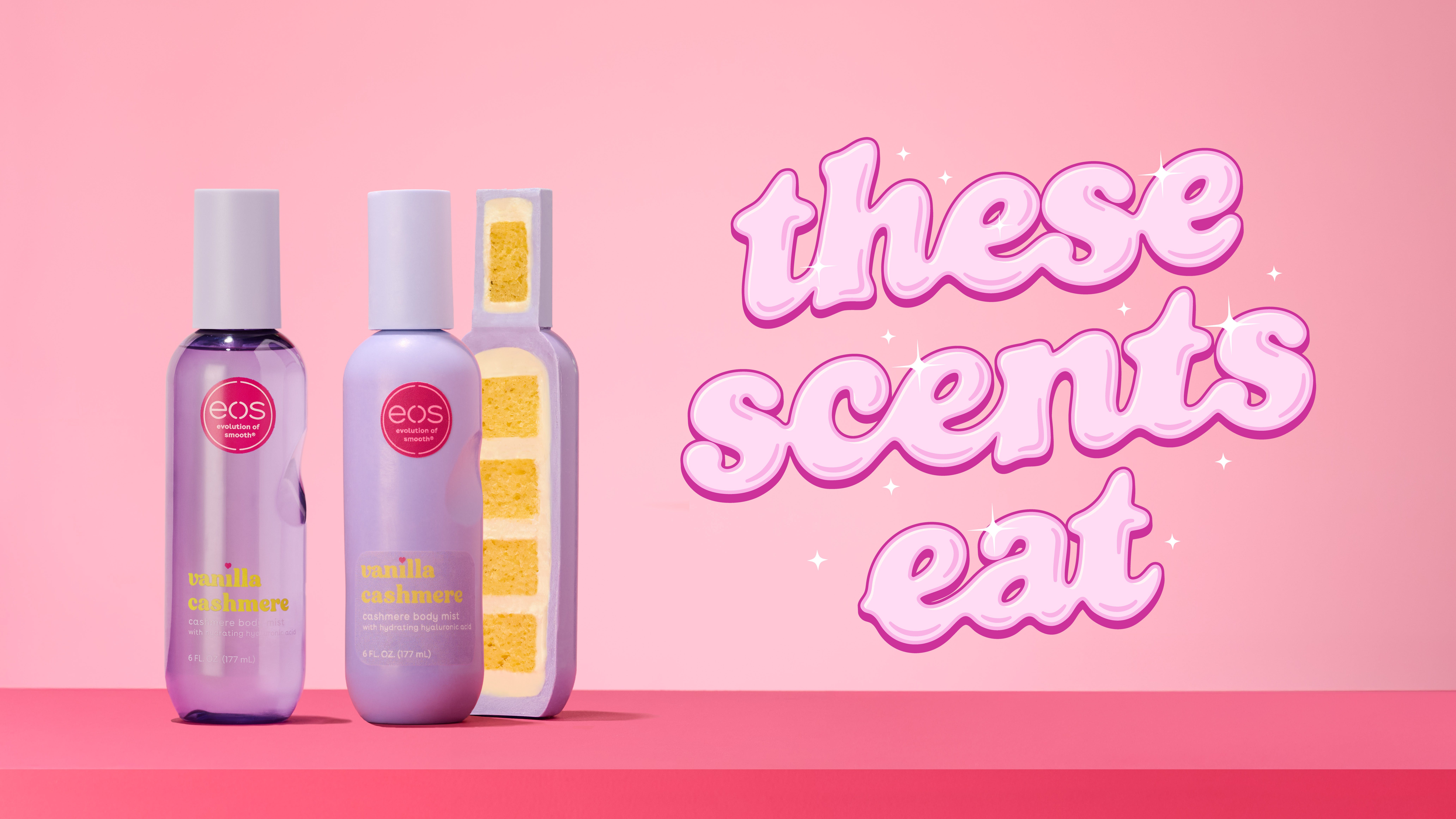
eos products smell good enough to eat.
So the brand turned its new line of body mist into cake.
Yah. For reals. In a partnership with GoPuff, people can order an edible bottle of vanilla cashmere body mist. There’s a merch drop of scented sweatsuits, too.
It’s a fun tease for the brand’s biggest Super Bowl appearance yet, which will feature SNL actor Mikey Day from Netflix’s “Is It Cake?”
eos ran a survey ahead of this and found two thirds of Americans reported that they've purchased a product specifically because it smelled "good enough to eat," while more than 70 percent have said a product smelled so good they wished it was edible.
The brand brought this insight to life in the most absurd and tasty way.
💎 JCPenney will swap your ex’s jewelry for a new diamond this Valentine’s Day
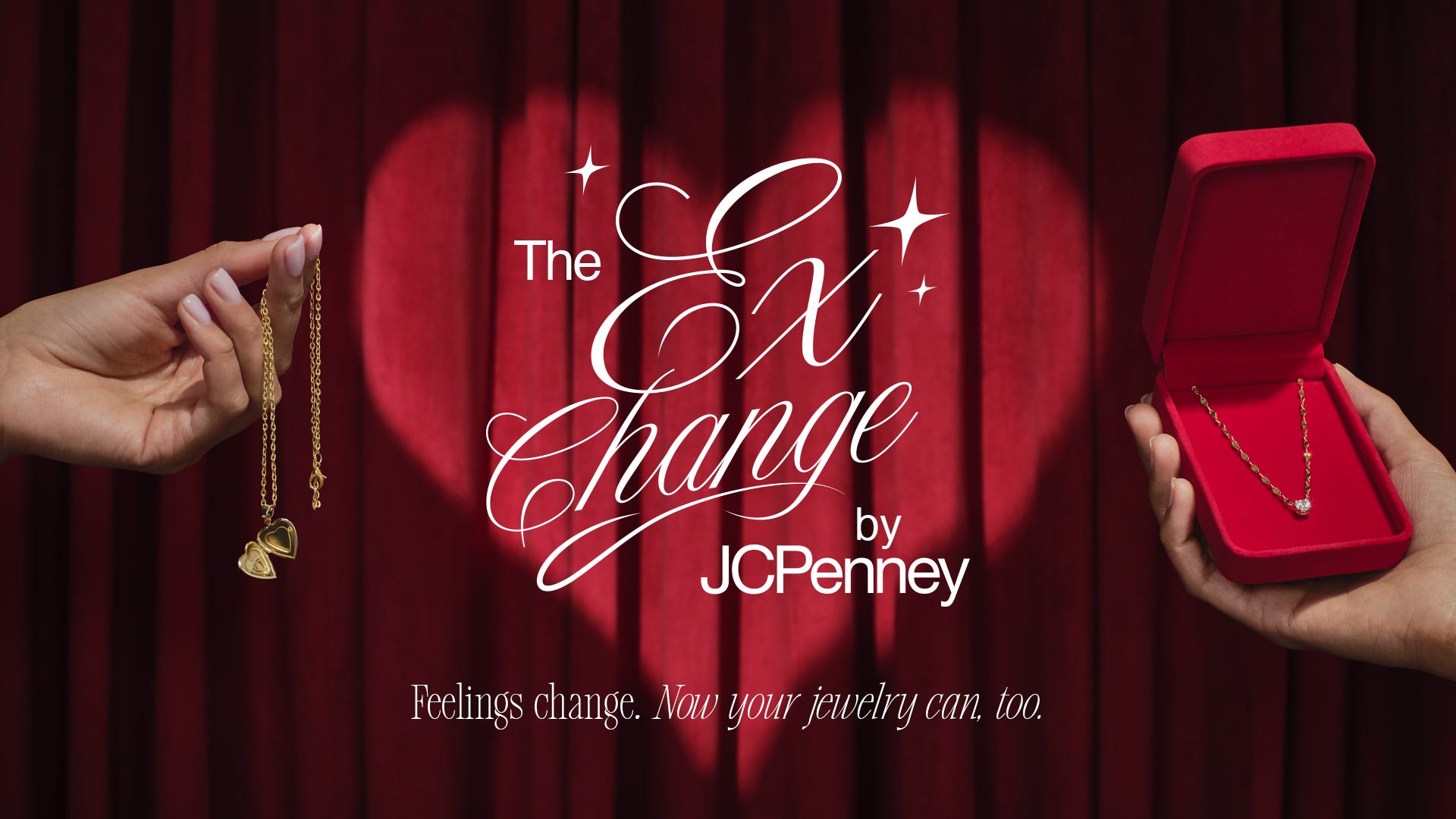
How about some counter-culture: While brands are stepping over each other to one-up couple’s romance this Valentine’s Day, JCPenney just wants you to be good to yourself by opening an “Ex-Change” to swap out your old partner’s jewelry gift for a new diamond.
JCP didn’t scrimp, either—at a half carat, this lab-grown sparkler is a beaut of a necklace.
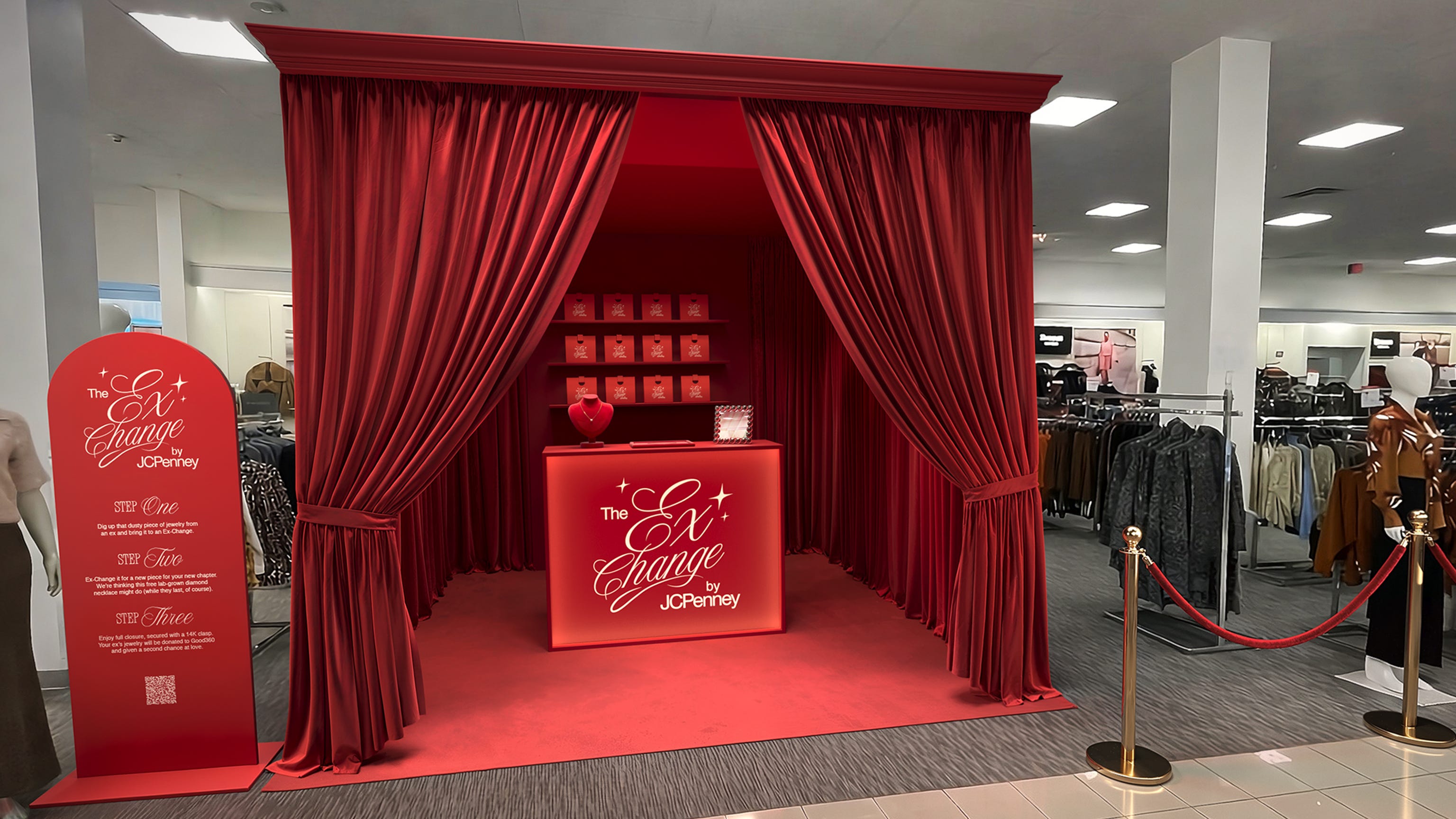
On February 14, the first 100 customers at JCPenney’s flagship store in Garden City, NY—and the first 50 customers at other participating store locations—can reclaim their moment (and their jewelry drawer). Visit JCPExchange.com to find a participating location and discover why your next chapter deserves better jewelry.
Can’t make it in store? All good. Shoppers can still celebrate moving on with The Perfect Ex-Cuse Discount—offering up to 70 percent off fine and fashion jewelry after extra 30 percent off with JCPenney Credit Card, or an extra 25 percent any way you pay, available on select styles, available Jan. 26 through Feb. 16 with code EXCUSE.
The work plays into JCPenney’s strategy nicely: People generally know the brand for great deals. But not enough shoppers know it’s kinda being slept on for having runway-ready fashion, high-end home/kitchenware, quality jewelry and more all AT great deals.
So when someone asks where you got this diamond necklace from, don’t be surprised if you find yourself repeating “Yes, JCPenney.”
K thanks bye.
By Oliver McAteer, Head of Development & Partner at Mischief